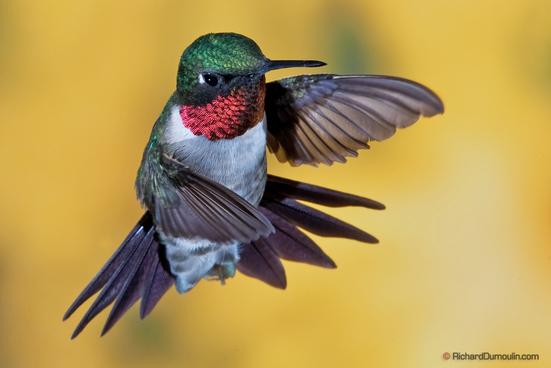
In my part of the United States,
we get one type of hummingbird during summer migration. These ruby throated
flying jewels are a joy to behold. I put out my feeder last Friday hoping they
will start coming around, if only on their way to more northern climes.
 |
| Wish I Could Take Credit for this Image |
So today I decided to share a
few tips about feeding hummingbirds. No doubt many interested folks already
know these, but educating one person is worth the effort.
First, you don’t need to buy
expensive hummingbird food. And the fluid doesn’t need to be dyed red. Most feeders
take care of that.
Simply mix four parts bottled
or filtered water with one part table (white processed) sugar. Do not, under
any circumstances, use powdered sugar as it often contains a small amount of
anti-caking agent. That is not any better for a tiny bird than the chlorine in
my tap water.
I don’t think I need tell
anyone not to use artificial sweetener. ~grin~ These flyers need lots of
calories.
As for the type of feeder, I prefer
the ones with a central water reservoir to deter ants. As shown below, it is
also easy to clean. The entire red top with perch lifts off the clear round
bottom portion. And the hook unscrews, so the top and bottom units can go into the dishwasher at the end of the
season.
 |
| Like Many Bird Species, Females and Juveniles Lack the Bright Coloration |
And cleanliness is important.
You don’t want mold growing on the sugar. And don’t be like me and let the
sugar water dry up. ~shakes head~ Check the feeder every three to five days,
more often in hot weather, and use a tiny bristle brush for scouring the four feeder
ports.
If insects gross you out, be
warned that you will find determined critters have made their way down into the
ports. I almost always discover little drowned bugs or see them bedraggled and
floundering. Never having been bitten or stung in the process, with a gentle
pour over the nearby grass I always hope survivors recover.
Meanwhile, I like to mix up a
good sized batch of ‘nectar’ and keep it in my refrigerator between fillings. Four
cups water and a cup of sugar goes a long way. Oh, and you don’t need to heat
the water. Sugar granules dissolve just fine with simple stirring of even the
coldest fluid. If you do make it ahead of time, just give a quick stir before
pouring out another serving.
Attracting them has been easy
for me. There are all kinds of annual and perennial plants that help with this;
I’ll let you look them up for your region if interested. And while these birds
are territorial, I often get to enjoy their acrobatic aerial confrontations. You
can imagine just how adorable I found a nest one autumn. Too bad I missed the
hatchlings and nobody returned to that spot since.
 |
| Amazing Photography, No? |
You can actually sit or stand
quite close to the feeder, too, if you’re patient and still. Some folks manage
to get them to land on a hat or sleeve. There are even feeder ‘hats’ you can
wear.
As for me, I found their
buzzing by my head startled me, as I’m
usually writing or reading if I sit outside, so my shepherd’s pole supporting
the feeder is about ten feet from my patio chair. And believe me, I still hear
them buzzing in for a landing to enjoy their presence.
Did you know hummingbirds
catch insects while in flight for protein? The potential for them catching mosquitoes
is just one more reason to adore them.
-